
 24/7 Emergency Service
Indoor air quality (IAQ) has become a major focus for homeowners who want healthier, more comfortable living spaces. Alongside tried-and-true ventilation and humidity control, three popular add-ons are showing up more often in residential HVAC conversations: UV treatment, bi-polar ionization, and advanced filtration. Each works differently, and the best results usually come from pairing the right technology with professional installation and good system design.
UV: Light-Based Treatment Inside the HVAC System
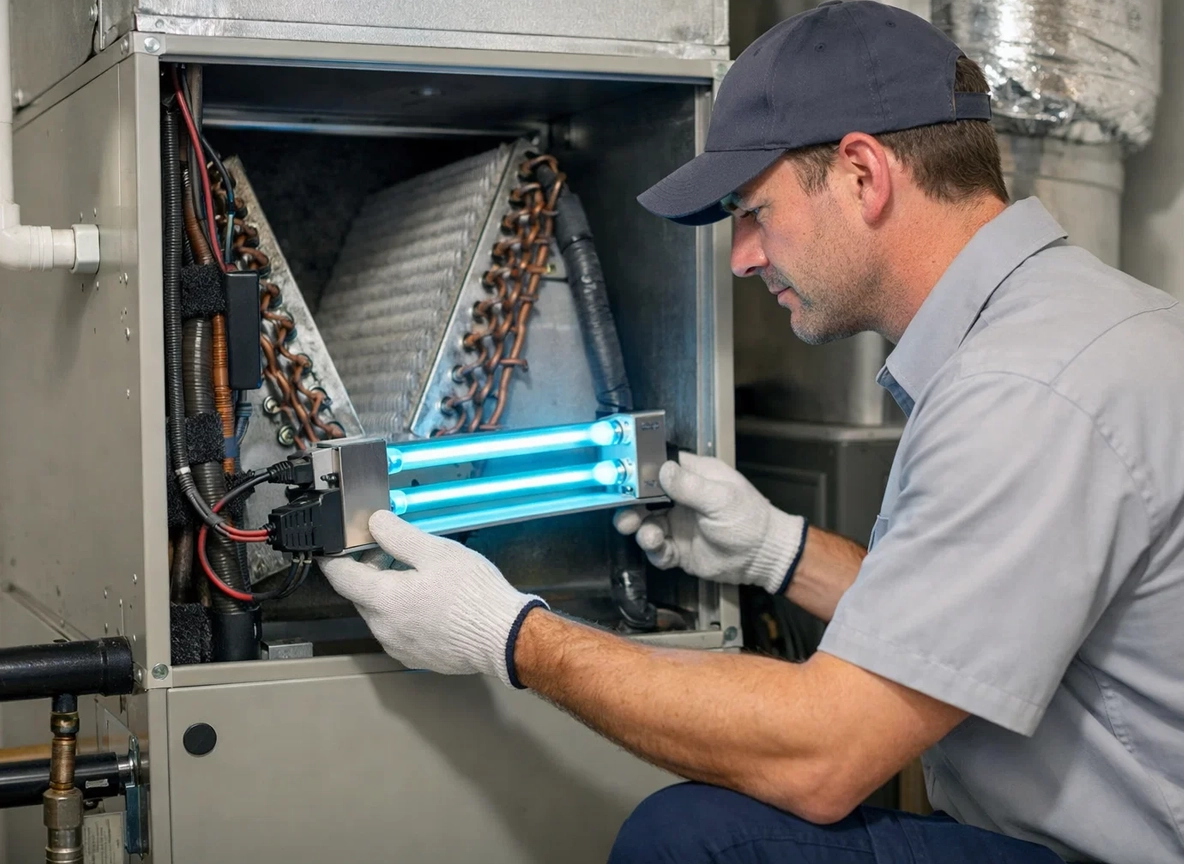
Ultraviolet (UV) IAQ products typically use UV-C light placed inside the air handler or near the evaporator coil. UV-C light can disrupt the DNA or RNA of certain microorganisms, reducing their ability to reproduce. In homes, UV systems are often used to help control microbial growth on damp surfaces—especially the coil and drain pan—where moisture can encourage buildup. Some UV options are designed primarily for “surface treatment” (keeping coils cleaner), while others target “air treatment” by placing UV lamps to expose moving air for longer periods.
A professional HVAC technician will evaluate where a UV lamp can be safely mounted, verify that materials in the air handler can tolerate UV exposure, and ensure the lamp is properly shielded so light doesn’t leak into occupied areas. We’ll also confirm electrical requirements, add service switches as needed, and show the homeowner how often bulbs should be replaced.
Bi-polar Ionization: Charging Particles to Improve Capture
Bi-polar ionization (BPI) devices generate positive and negative ions that disperse into the airstream. Those ions can cause tiny airborne particles to cluster together, making them easier for filters to capture. In some configurations, ionization may also reduce odors by driving chemical reactions with certain airborne compounds. Because ionization technologies vary widely by system, performance depends heavily on the specific device design, airflow conditions, and proper placement.
Installation typically involves mounting the ionization unit in the supply plenum or near the air handler where it can distribute ions throughout the duct system. A technician from our team will confirm the system’s airflow, ensure the device is correctly sized for the duct and fan capacity, and wire it to operate only when the blower runs (or per manufacturer guidance). We may also review maintenance needs, such as cleaning emitter points or checking indicators.
Advanced Filtration: Capturing More, Without Strangling Airflow
Filtration is the most direct way to remove particles—dust, pollen, pet dander, smoke, and more—from indoor air. “Advanced” filtration usually means a deeper media filter cabinet (often 4–5 inches thick) or high-efficiency options designed to capture smaller particles than standard 1-inch filters. The key is balancing filtration efficiency with pressure drop: a filter that’s too restrictive can reduce airflow, strain the blower, and hurt comfort and efficiency.
A technician will measure the system’s static pressure, confirm the blower can handle a higher-efficiency filter, and recommend a properly sized media cabinet to maximize surface area and minimize restriction. We’ll also check for duct leaks (so air isn’t bypassing the filter) and may suggest sealing improvements to ensure filtered air stays clean.
Getting the Best Outcome
No single device is a magic fix. The strongest IAQ upgrades come from a whole-home approach: confirm good airflow, seal the ductwork where needed, control humidity, and then choose IAQ add-ons that fit the home’s needs and the HVAC system’s capacity. A qualified HVAC technician from our team can design an IAQ package that’s effective, safe, and maintainable—so the homeowner gets real, measurable improvements in comfort and cleanliness.
ContactFulkerson Plumbing & Air Conditioning for your indoor air quality needs today!
 575-622-1600